This is the blog post I wished I could have read when making electric vehicle (EV) purchasing decisions in 2024.
To help others make an informed decision, you need to understand:
- my own family's situation at the time of purchase,
- our unmet needs, and
- how the EV9 met those requirements.
Pedantic enough for you? Because this will more more pedantic than you think.
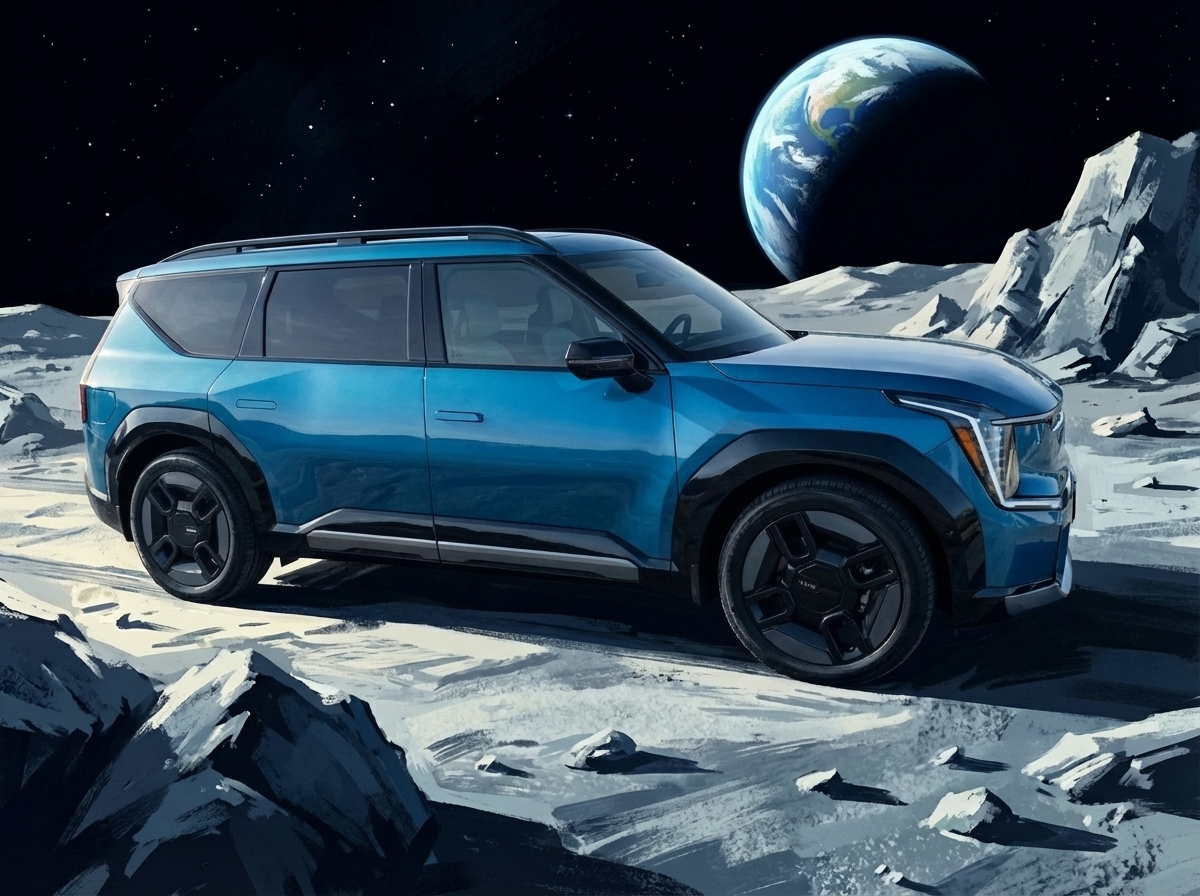
Figure 1: Actual photograph from the surface of the moon
The Petroleum Status Quo
After two kids age five and under, we needed a new car.
I'd owned a 2009 Toyota Tacoma for a long time: it isn't an ideal family hauler, but it was flexible enough to last us until this point. However, the main drawbacks we faced were:
- Cabin space. Even with an extended cab, maneuvering car seats or wriggling children are pretty untenable.
- Fuel costs. A mid-sized truck with decent hauling capacity and a bed is useful, but everyday trips around town start to pile up gas costs with the average truck MPG.
- Modern conveniences. I loved my 2009 truck, but we live in Idaho and lacking some perks like steering wheel warmers in the winter can be sort of harsh. We had a back up camera, but more of those around the car would be nice, too.
To EV or Not To EV
Faced with that wish list you could probably buy a gas-fueled minivan or SUV and glean a lot of perks from that massive amount of interior space and utility. Choosing an EV means drastically limiting your options for family-sized vehicles: for example, if you're set on a van form-factor, you're sort of limiting yourself to an ID. Buzz.
You could drown reading "Why choose an EV?" articles (LLM-generated or otherwise), so here's the short list for why we went with an EV given the choice constraints it places you under:
Maintainability
I think sustainability is important, so why would I even bring this up first?
If you're a car owner tasked with maintenance then you and I both have been through oil changes, flushing transmissions, and other assorted Good Times. I know that electric vehicles carry their own, different maintenance burdens. Even then, I just felt done with the regularity of internal combustion maintenance. There's just so much of it!
I would even say that we were probably subject to average or below-average maintenance toil with our existing car: Toyotas tend to be reliable in that sense and our Tacoma was like that. It was a pretty good vehicle! But I was optimistic that we could maybe avoid the regularity of the maintenance burden that an ICE vehicle requires.
We considered various plug-in hybrid options as well (vehicles with sufficient hardware to operate as EVs before switching to gas as necessary). Ultimately I felt like the complexity of two systems in one car would exacerbate potential issues and maintenance burden and so far I'm grateful we only have the EV systems to care for.
Convenience
Fueling up at a gas station is muscle memory for most Americans but charging just felt like it would be… easier overall. Time becomes a very limited resource beyond a certain number of kids and so skipping one semi-frequent errand to the gas station entirely is pretty significant time savings.
This is sort of contingent upon a having a level 2 charger at home, but we were already prepared to install that if we bought an EV.
As far as additional conveniences go, newer vehicles obviously have lots of perks, and the electric ones in particular come pretty loaded with frills (whether you want those frills or not). I'll talk more about the specific perks we really latched onto later.
Sustainability
Okay, this one is pretty standard criteria for choosing an EV. It's nice to be decoupled from the trials and trevails of gas prices and petreoleum geopolitical drama. Electricty prices in our state tend to be pretty reasonable and we'll likely do solar in the future as well.
A low-key benefit of driving with electric is that I always felt like firing up a combustion vehicle was kind of a chore. Driving an EV sort of feels like having a golf cart in the garage in the sense that I don't really care about the overhead of running to the store or for a trivial errand: I turn the car on and go, and if I'm low on charge at the end of the day, plugging in is easy.
The EV9 Review
Okay, so we ended up choosing a Kia EV9.
Why didn't we choose a R1S? Primarily: it was more expensive. Our EV9 also has captain's chairs (i.e., no middle seat in the second row) and those have been great for moving around in the car. Anecdotally, the EV9 also feels more nimble while driving compared to our R1S test drives, which is more pleasant. The big loss not choosing an R1S is the battery size and usable front trunk.
Why didn't we choose a Model Y? Primarily: space. The third row in that vehicle is a lackluster afterthought with a comparatively minimal trunk. The ride in the EV9 is also much smoother. Frankly driving around a Model Y just felt dramatically less comfortable.
Why didn't we choose a ID. Buzz? Lack of availability and form factor. We don't plan on a massive family that would warrant the extra room and there's more resources for work on Kia vehicles than VW vehicles in our area, generally speaking (for example, there were several EV9's nearby to test drive, not a single ID. Buzz.)
Range and Charging
This was probably our chief concern moving from a gas to electric vehicle for the first time: could we manage charging requirements, particularly on long trips?
Overall: this turned out better than we anticipated. For context, we live in a city outside of Boise, and although that's pretty populous in 2025, traveling across the state is much more of a concern. You can't rely on charging stations to appear with the same frequency as gas stations traveling across Idaho.
The tl;dr is that compensating for less-frequent charging opportunities is very easy to do but just requires planning. The MVP for this is a mobile app called ABRP (A Better Route Planner) which is outrageously helpful:
- It understands the mileage of different EV models that you can preferentially remember as your main vehicle
- You can configure desired stopping locations, durations, and charge levels on arrival or departure
- The mode of operation is "set your desired outcomes and it figures out the rest"
The other app that's useful to have on-hand is Plugshare to have additional crowdsourced information about charging station reliability and availability.
Taking an extra 15 minutes planning for long trips will let you pretty much nullify the complexities of charging on long-haul trips even in charging deserts like intrastate Idaho. I usually don't let ABRP figure it out solo and spot-check assumptions like the number of operational stalls at a charging station or if there are newer stations it may not be aware of, both of which often show up in Plugshare.
The EV9 has a decent onboard map and charging integration, but it lacks the sophistication of the apps I mention here. We still use it on occasion and, critically, you need to remember that the onboard charging navigation will precondition the battery for charging at your destination while relying on apps will not. You can perform this step manually, however (which we usually do 20-30 minutes away from charging station arrival).
Our adjustments to initially-skeptical expectations mainly arose from just how fast some charging stations are and the convenience of making stops in proximity to charging stations. We can usually pull 190kW from newer Electrify America chargers and that is really fast in the sub-80% charge sweet spot. If you're really trying to optimize, topping off to 80% from a high-power charger is the same amount of time you'd take for a rest stop anyway.
On both of our long-range trips we used chargers adjacent to dining for long charging sessions and that strategy works wonderfully. In both cases we began charging, walked to a nearby restaurant, and ate lunch and let our kids take a rest stop and never ended up actually sitting and waiting specifically to charge.
Even though the range isn't in the same league as a maxed-out R1S, it's much better than something like a Nissan Leaf. We've taken the EV9 on two long trips so far: the first was a trial run to a spot about two hours away which would require recharing on the road from the Boise, Idaho area to Sumpter, Oregon:
We were wary of our first longer trip in an EV so we played it safe with this one. Fortunately, we had access to pretty fast charging and:
- We waited for our kids longer than the car for the first stop, and
- We ate lunch while charging at our second stop so the wait wasn't noticeable that time, either.
Our second trip took us to Rexburg which was much longer and required more careful planning although it also went smoothly:
The trip from Boise to Rexburg was straightforward (and chargers at Wal-Mart are fast btw). The return trip was more interesting: when you cross Idaho you can often choose between the southern route (which is more populated and has more amenities) but what the nothern route lacks in amenities it makes up for in scenery because you drive through Craters of the Moon!

Figure 2: It's much cooler than it seems, trust me
We were hesitant at first (as EV drivers) to choose a route with far fewer charging options but ultimately went for it and were glad we did. The first charging stop was at Arco which is a neat little town in Idaho that strongly identifies with its roots in nuclear power and has a nice charging stop adjacent to some historial sites, food, and rest stops.
The EV9 had sufficient charge after Arco to make it through the remainder of the route into Boise where we picked up a few kWh just to be safe before making it back home. ABRP was very helpful to orchestrate the whole trip and we never felt like we were cutting it close.
The only other topic to mention here is at-home charging: our level 2 charger required a 240V outlet installation in our garage, but we found an electrician to handle that for us and it required just half a day of work. Aside from that, we plug in at night when we're low, and that's about it.
As EV adoption accelerates, this situation should only get better. The current charging availability on long-haul trips is the worst it will ever be, and that isn't too bad.
Comfort & Size
Out of all the comparable cars we test drove, the EV9 feels really good on the road. It was the smoothest ride, very responsive, and the ability to tweak the acceleration is nice. We usually set ours to "I-Pedal MAX" to engage single-pedal driving.
Were I to design our ideal EV, I'd probably drive something with more interior space than the EV9, but the mid-size SUV form factor works pretty well. If you know the sensation of driving a "boat" like a Suburban, then driving an EV9 feels comparatively much tighter and less onerous than a large SUV.
The GT trim is a high-priced package, and although it feels… weird to consider a Kia a luxury vehicle of sorts, it sure feels nice.
If you've read other posts on this blog you'll know that I err towards solutions that are less shrink-wrapped and commercialized and more do-it-yourself. Modern EVs are the antithesis of do-it-yourself: they're packed to the gills with frills which isn't ideal for my mode of operation. Despite this sentiment we're still satisfied; you have to pick your battles sometimes. In the future maybe vehicles like Slate will provide the ideal balance: an electric vehicle that capitalizes on an electric drivetrain but doesn't overwhelm you with dozens of luxury systems that need maintenance and (god forbid) a yearly subscription to operate.
And The Rest
Okay, so generally speaking we really like the car. In which cases would it be the sub-standard choice?
- If you anticipate moving beyond seven (or eight) seats. To be super clear, you're not getting the capacity equivalent of a full-sized SUV.
- If you don't intend to install a level 2 charger at your residence, charging may be inconvenient.
- If you're hoping to cast off the shackles of traditional dealership annoyances like sales, upselling, and yearly subscriptions, you won't dodge that like you would with a Tesla or Rivian.
Regarding that last bullet point: Kia Connect provides lots of conveniences but… is a subscription-based service. Congratulations, traditional dealers found an even more effective way to turn cars into recurring revenue.
Here are some miscellaneous items about our EV9 ownership experience:
- "Remote parking assist" felt gimmicky at first but we absolutely love being able to move the car in and out of the garage without getting in. We pull out the remote, walk the car into the driveway, do what we need to do (usually accessing storage) and walk it back in. It's great.
- We spun our proverbial wheels a little bit figuring out if the charge architecture was worth worrying about (in short: the EV9 uses an 800-volt architectureversus a more-comon 400-volt system). The EV9 ends up being less optimal for the current state of generally-available charging, but compatability will get better over time. In the end it wasn't worth stressing about.
- My five-year-old opened the lift gate into our garage door on the second day of car ownership. Kids, am I right?
Summary
Overall: we'd do it again. EV ownership in general has felt great, and the EV9 specifically is more comfortable than a Tesla, more affordable and nimble than an R1S, and easier to support than a Volkswagen ID. Buzz.